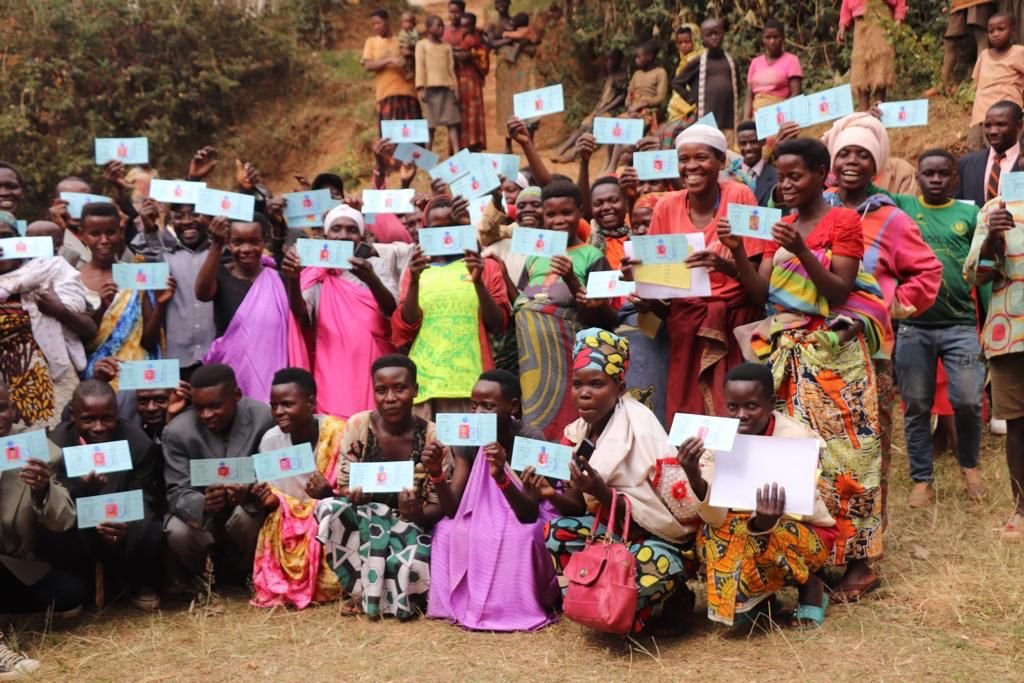
Assejeba Projects and Initiatives
Assejeba Projects
-

The King's Hope School
Assejeba constructed the King’s Hope School to benefit and integrate Batwa children with the broader community.
Why establishing the King’s Hope School in Batwa Village?
The establishment of King’s Hope School by ASSEJEBA is a significant and transformative initiative aimed at addressing the numerous barriers that the Batwa community faces in accessing quality education. The decision to create this school stems from a deep understanding of the unique challenges that these indigenous people encounter, including geographical isolation, poverty, cultural stigmas, and systemic discrimination.
Addressing Barriers to Education
1. Geographical Isolation: Many Batwa communities are located in remote areas where educational facilities are either far away or nonexistent. By establishing King’s Hope School within their village, ASSEJEBA has made education accessible to 360 students from various tribes, promoting integration and unity among diverse communities.
2. Economic Support: Recognizing that many families prioritize immediate economic needs over education, ASSEJEBA not only supports children with school materials but also assists parents by providing seeds for farming. This dual approach ensures that families can grow food to nourish their children while also enabling them to attend school without worrying about basic sustenance.
3. Cultural Sensitivity: The stigma surrounding the education of indigenous groups often leads to marginalization; however, King’s Hope School is designed with cultural relevance in mind. It respects the traditions of the Batwa while offering essential skills necessary for their development.
4. Language Inclusivity: With language differences posing challenges in traditional educational settings—where instruction may occur in languages unfamiliar to Batwa children—King's Hope aims to incorporate bilingual elements into its curriculum, helping bridge communication gaps and enhancing learning outcomes.
5. Resource Provision: Understanding that many parents struggle to afford uniforms and school supplies such as notebooks and pens due to extreme poverty, ASSEJEBA provides these essential materials free of charge. This support alleviates financial burdens on families and encourages higher enrollment rates.
Future Aspirations
Looking ahead, ASSEJEBA plans to implement a feeding program at King’s Hope School so that every child receives nutritious meals during school hours—a critical factor in improving concentration and academic performance. Additionally, there are aspirations for opening a boarding facility which would further enhance access for students who live far from the school or face daily travel challenges.
Conclusion
In summary, the creation of King’s Hope School represents a holistic approach towards empowering the Batwa community through education while addressing socioeconomic factors head-on. By integrating support systems for both children and their families—including agricultural assistance alongside educational resources—ASSEJEBA is paving the way for sustainable development within this marginalized group. Through initiatives like this one, we can foster an inclusive environment where all children have equal opportunities to learn and thrive.
-
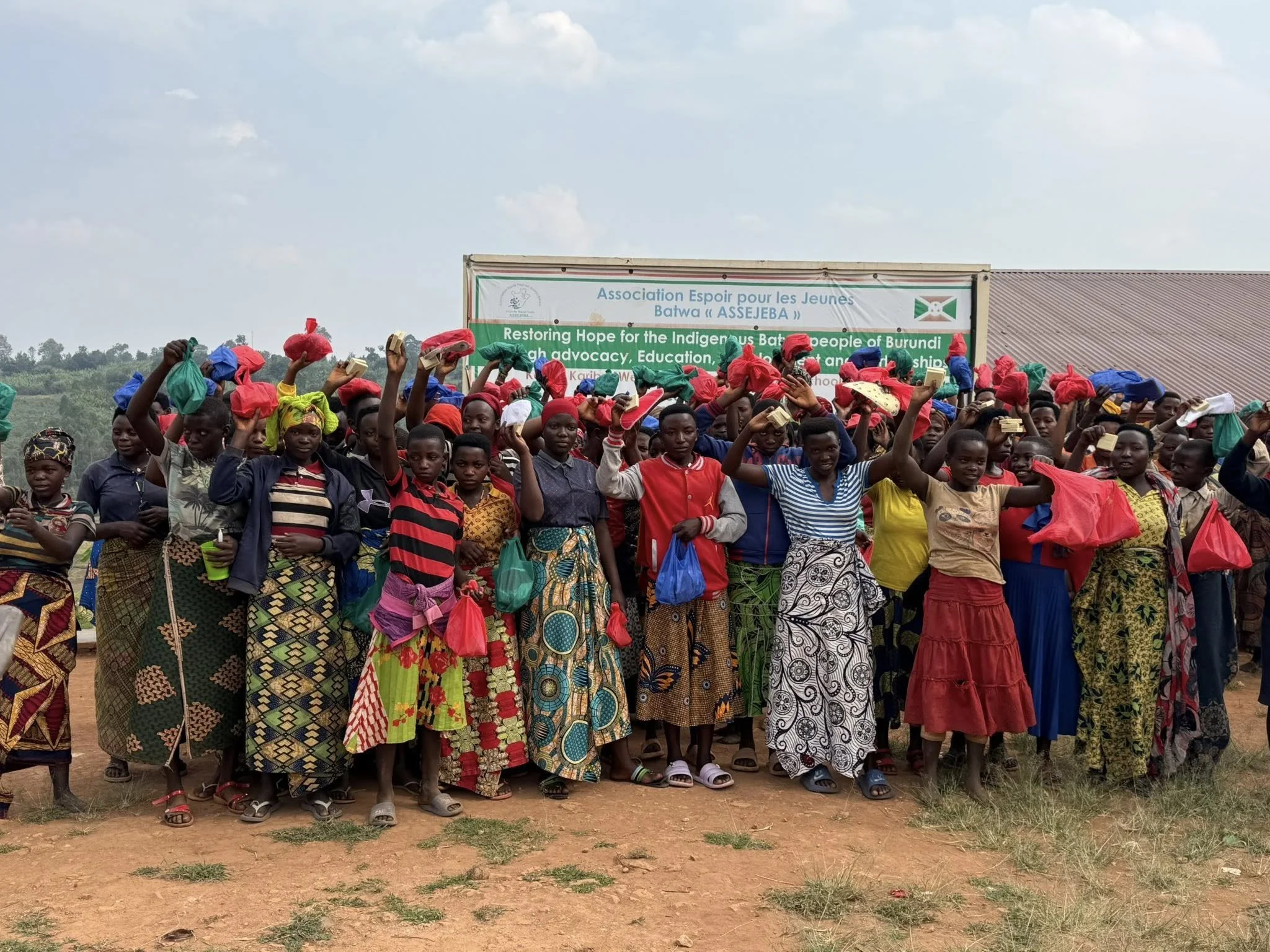
Reusable Pads Production and Provision Program:
Empowering Batwa Women and Girls
The Challenge: Breaking the Cycle of Marginalization
The indigenous Batwa people of Burundi face extreme systemic challenges. Among this community, women and girls suffer a double burden, facing the compounded effects of ethnic discrimination and severe poverty. These conditions create formidable barriers to daily life, health, and education.
For Batwa women and girls, managing menstrual hygiene is not just a personal matter—it is a crisis of dignity. The lack of access to affordable, safe, and effective sanitary products has devastating ripple effects:
• Education Under Threat: Despite free access to primary and secondary schooling, high dropout rates persist among Batwa girls. A primary driver is "period poverty." Without pads, girls miss one week of school every month, eventually falling behind and leaving school entirely due to distress and societal stigma.
• Health Risks: Driven by necessity, many women resort to unhygienic alternatives such as old rags, leaves, or bark. These practices lead to serious gynecological issues and chronic infections, jeopardizing their long-term health.
• Economic Impact: Batwa households often rely on women’s daily labor for survival. When a woman cannot manage her period hygienically, she cannot work, threatening the food security of her entire family.
• Social and Psychological Strain: The inability to maintain hygiene causes immense psychological distress. It strains intimate relationships and family stability, as the associated discomfort and stigma can lead to domestic tension or abandonment.
Our Vision: Restoration of Dignity
The Reusable Pads Production and Provision Program is a holistic response to these challenges. We believe that menstrual health is a fundamental right and a cornerstone of gender equality.
Our program is designed to enhance the dignity of Batwa women and girls by improving health outcomes, ensuring educational consistency, and creating sustainable economic pathways.
The Aim of the Program
This initiative focuses on four key pillars of impact:
1. Health and Hygiene: Providing high-quality, reusable sanitary kits that offer a safe and hygienic way to manage menstruation, drastically reducing the risk of infections.
2. Educational Equity: Eliminating the "period gap" in schools by ensuring every Batwa girl has the resources she needs to stay in the classroom every day of the month.
3. Economic Empowerment: Transforming a challenge into an opportunity. Through our training programs, Batwa women learn the professional skill of pad-making, creating income-generating opportunities within their own community.
4. Social Dignity: Promoting dignified intimacy within couples and reducing the emotional toll of poverty through education and the provision of reliable hygiene resources.
How We Work
By producing reusable pads locally, we ensure a sustainable supply chain that is not dependent on expensive imports. These pads are environmentally friendly, cost-effective, and culturally appropriate.
Our approach goes beyond just giving; it is about building. We train, we educate, and we provide. By empowering a Batwa woman to produce her own sanitary products, we are helping her stitch together a future of independence, health, and pride.
Join us in restoring dignity and keeping girls in school. Together, we can ensure that menstruation is never a barrier to a woman’s potential.
-
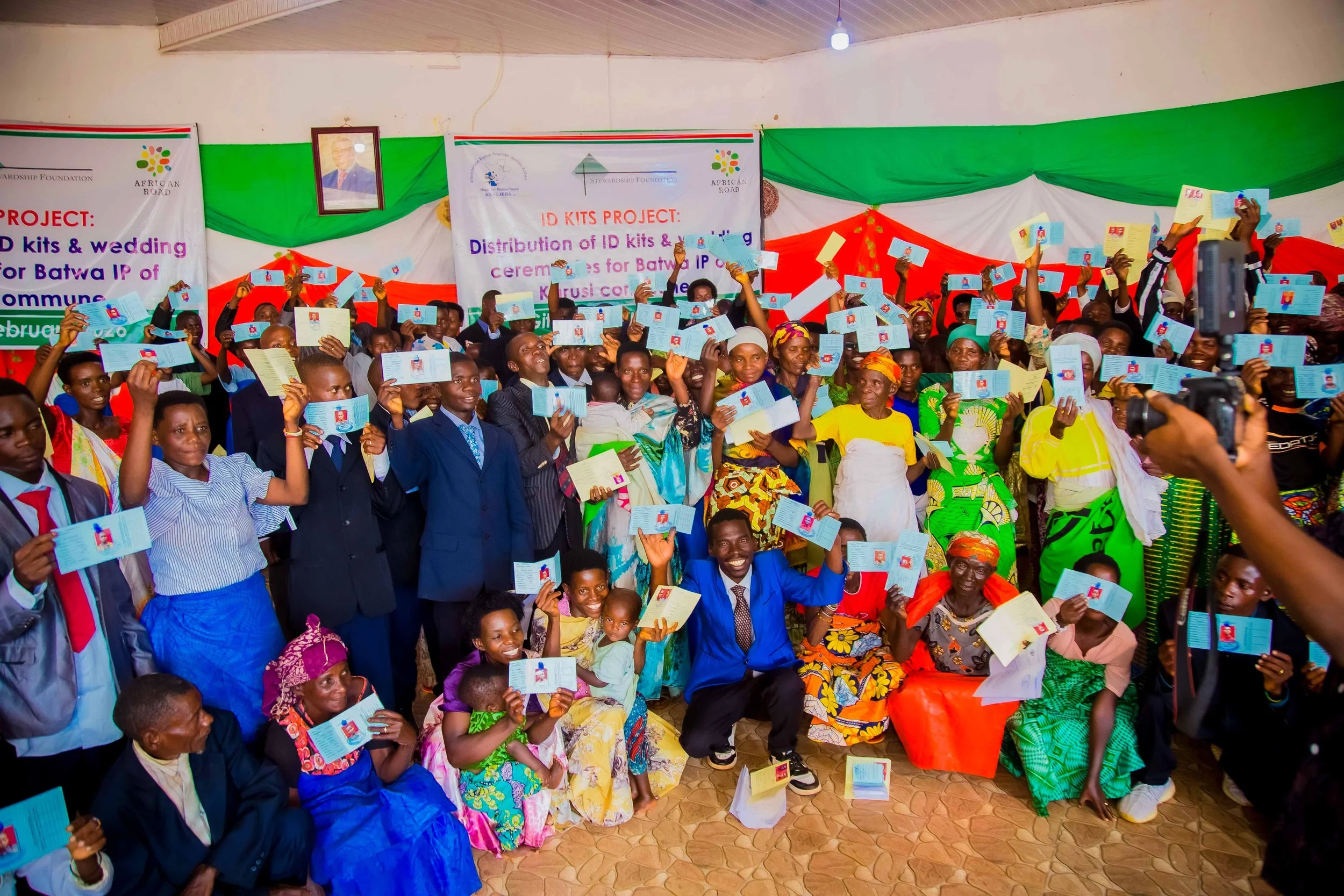
ID KITS Program
ID Kits Program for Batwa Indigenous People
The ID Kits Program for the Batwa indigenous people aims to provide essential documentation that is often taken for granted in many societies. By supplying ID cards, birth certificates, marriage certificates, and insurance cards, this program seeks to empower the Batwa community by ensuring their legal recognition and access to various rights and services. Here’s a closer look at each document and its significance:
1. ID Cards
With National ID cards, people are legally recognized as citizens. This has been a historically difficult right to obtain due to extreme prejudice against the Batwa and lack of literacy. ID Cards help Batwa have access to services, to more fair trials, to legal representation, marriage, and equal rights.
• Legal Recognition: An ID card serves as proof of identity and citizenship, which is particularly important for marginalized groups like the Batwa who have historically faced discrimination.
• Protection from Arrest: Without an ID card, members of the Batwa community are vulnerable to arbitrary detention or imprisonment by law enforcement authorities. Having proper identification helps prevent wrongful arrests based solely on lack of documentation.
• Access to Justice: In legal matters, an ID card is typically one of the first requirements when seeking justice or filing complaints with law enforcement or judicial systems. Without it, individuals may be unable to pursue legal recourse or protect their rights effectively.
• Access to Services: With an official form of identification, individuals can access government services such as healthcare, education, and social welfare programs that require verification of identity.
• Voting Rights: Having an ID card allows members of the Batwa community to participate in elections
2. Birth Certificates
Purpose: Birth certificates are fundamental documents that confirm a person’s birth details.
• Establishing Identity: A birth certificate provides legal proof of age and identity which is vital for accessing educational opportunities.
• Rights Protection: It protects children from being denied their rights due to lack of formal documentation; .
• Healthcare Benefits for Children Under Five: For children under five years old, having a birth certificate is especially critical because it enables them to benefit from government programs providing free healthcare. Parents must present these certificates when seeking medical care under these initiatives.
• Cultural Significance: For many indigenous communities including the Batwa, having a birth certificate affirms cultural heritage while fostering a sense of belonging within society.
3. Marriage Certificates
• Legal Rights & Protections: They grant couples access to various legal benefits associated with marriage such as inheritance rights or spousal benefits which can enhance family stability.
• Protection for Women in Couples: Legal marriage offers significant protections for women within relationships. It ensures that women have recognized rights regarding property ownership and inheritance a critical safeguard against potential exploitation or abandonment by partners.
• Social Recognition: A marriage certificate fosters societal acceptance by providing formal acknowledgment of partnerships within communities where traditional customs might not be officially documented.
• Health Benefits Access: Couples with valid marriage certificates may also gain better access to health insurance plans or joint financial products based on marital status enhancing overall family well-being.
4. Insurance Cards
Purpose: Insurance cards enable individuals or families coverage under health care plans or other insurance policies.
• Healthcare Access & Affordability: With an insurance card, members can seek medical attention without facing prohibitive costs a critical need given health challenges often faced by marginalized populations like the Batwa.
- Financial Security Against Risks : Insurance coverage helps protect families against unforeseen events
Conclusion
By implementing the ID Kits Program focused on providing these essential documents the aim extends beyond mere administrative recognition; it encompasses empowerment through dignity while facilitating greater inclusion into broader societal frameworks.
-

Agriculture, Farming & Food Security
In Burundi, more than 80% of the people live off of farming. Hunger, malnutrition and famine still exist due to the Batwa being stripped of their lands. We offer Batwa people their own land and support to plant, grow, and tend crops. Assejeba helps the Batwa find arable lands, get a shelter, select seeds, and fertilizer so they can grow and harvest crops.
For the first time, people are growing crops year-round. Ongoing work examines the best ways to utilize these ancestral lands for the greatest benefit.
-

Three Villages Project
Gahombo - Sitting on a steep hillside, Gahombo is the smallest of the three villages. As the village with the most need, Assejeba chose them as the first village to receive brick houses when this funding became available in 2021.
Ndava - With sweeping farmland and a little preschool started by Assejeba, Ndava has special expertise in clay pot making.
Mwendo - Closest to a population center, Mwendo is the largest of the three villages. Assjeba started a multi-classroom primary school in the village center.
-

Artisan Crafts & Small Enterprise
Batwa people are highly skilled craftspersons who make stunningly beautiful pottery formed from the land itself in a tradition passed down orally for thousands of years.
We support their small enterprise along with other crafts, textiles and more.
-

Culture & Sports
The Batwa can sing and dance even when they have nothing to eat, when they are angry or when they are happy: it is the same. We are teaching these songs and dances to our visitors as well as our children and we have a desire to make videos about these songs and dances that could be broadcast all over the world.
-

Legal Support
Batwa are often unjustly jailed simply because they do not have a National Identity Card due to the fact that they cannot afford it. They often spend a lot of time in jail and do not even have a lawyer to plead their case and can even be robbed of their property for lack of someone to plead their case. Assejeba often helps them by giving advice to help them understand their rights, and to support funds for their legal representation.
-

Vacation Youth Camps
Vacation youth camps with students from different areas for mutual encouragement.
-

Trainings & Workshops
We conduct training seminars for Batwa leaders and the Batwa themselves on human rights because we have noticed that the Batwa have very little knowledge of their rights compared to other segments of the population. We also do training about the fight against AIDS, without forgetting people who think that Batwa cannot contract HIV/AIDS. We also insist on the fight against drugs as well as gender-based violence.
-

Ndava Good Hope Preschool
Preschool built in Batwa village for 200 children (Batwa, Hutu and Tutsi). We provide uniforms, school supplies, and tuition. This project promotes the integration of Batwa children and puts an end to segregation.
We have a dream to have an institution that includes all levels from Preschool, Primary school, Secondary school and even University.
-
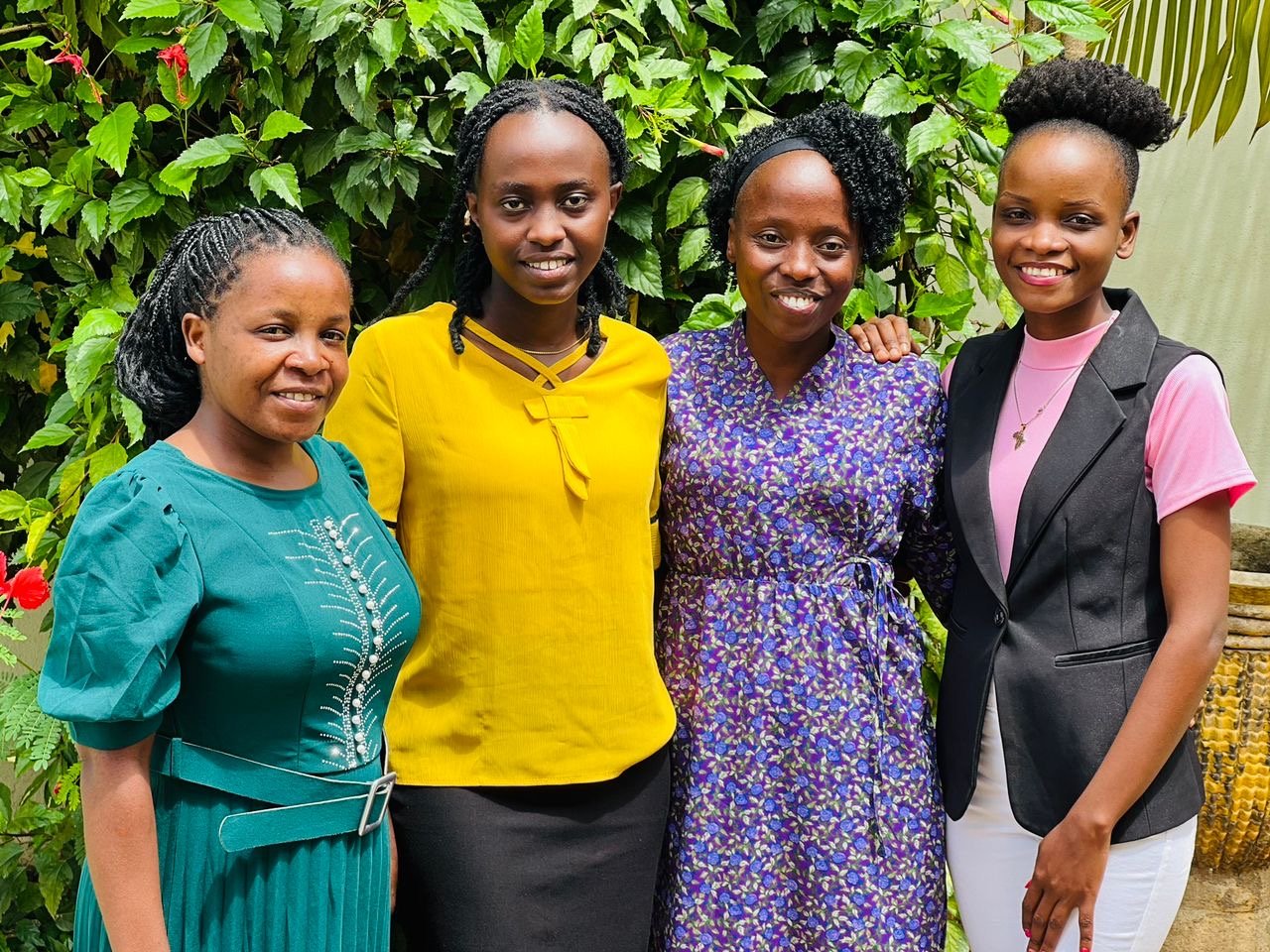
Empowering Batwa Indigenous women
Empowering Batwa Women Through University Education
The Batwa women have historically faced significant barriers to education, stemming from cultural stigmas, economic challenges, and systemic discrimination. Despite these obstacles, there is a growing recognition of the importance of education for empowering individuals and communities. ASSEJEBA has launched a dedicated program aimed at supporting Batwa women who have completed high school and wish to continue their education at the university level.
Breaking Down Barriers
For many Batwa women, the journey to higher education has been fraught with challenges. Traditionally marginalized in society, they often lack access to resources that would enable them to pursue further studies. Many face financial constraints that make it difficult to afford tuition fees, books, lodging, and food essentials necessary for academic success. Additionally, societal expectations may discourage them from seeking higher education opportunities.
ASSEJEBA's program seeks to break down these barriers by providing comprehensive support tailored specifically for Batwa women who aspire to attend university. This initiative not only addresses financial needs but also fosters an environment where these women can thrive academically and personally.
Comprehensive Support System
1. Financial Assistance: The program offers scholarships covering tuition fees as well as essential educational expenses such as textbooks and supplies. Importantly, it also includes support for lodging and food costs during their time at university. This holistic approach alleviates the financial burden on students and their families while encouraging more young women to consider pursuing higher education.
2. Mentorship Opportunities: Recognizing the value of guidance in navigating university life, ASSEJEBA connects Batwa female students with mentors—both academic advisors and professionals in various fields who can provide support throughout their educational journeys.
3. Skill Development Workshops: In addition to academic preparation, workshops focusing on essential skills such as study techniques, time management, public speaking, and career planning are provided. These skills empower students not just for university success but also for future professional endeavors.
4. Community Awareness Campaigns: By raising awareness within both the Batwa community and broader society about the importance of educating girls and women, ASSEJEBA aims to change perceptions surrounding female education among indigenous populations.
5. Creating a Supportive Network: Building a network of fellow students allows Batwa women attending universities together or separately to share experiences; foster friendships; collaborate on projects or studies and ultimately create a sense of belonging within what can sometimes feel like an overwhelming environment.
By investing in these determined young scholars through our dedicated programs we aim not only uplift individual lives but also combat double discrimination they face as both indigenous people and females striving toward academic success ensuring they receive equal opportunities alongside their male counterparts.
The impact of supporting Batwa women's access extends beyond individual achievement; it holds transformative potential for entire communities as educated individuals contribute positively back home through improved health practices or increased economic opportunities while serving as role models inspiring younger generations aspiring towards similar paths ahead.
